Water bodies—from shallow industrial canals to wide, deep lakes—are the most underutilized natural feature of X-Isle, offering unique tactical advantages against ARC’s ground forces. **Hydro-Tactical Engagement Strategy (HTES)** is the specialized doctrine dedicated to utilizing water as a resource-efficient barrier against kinetic movement, enhancing stealth capabilities, and negating the efficacy of specific ARC sensor systems. Mastery of HTES is crucial for establishing natural defensive lines and facilitating covert traversal.
This final analysis details the principles for leveraging water bodies, demonstrating how simple environmental physics can disrupt the machine’s logistics and combat protocols.
HTES Principle 1: Mobility Degradation
Most large ARC ground units are not designed for rapid aquatic traversal; their mass and chassis geometry suffer significant kinetic resistance in deep water. HTES mandates luring heavy ARC patrols (Warden, Enforcer) into deep water bodies, forcing their speed to degrade exponentially. This creates an immediate window for the Raider team to reposition or engage the impaired unit with focused fire, as the movement penalty turns the heavy unit into a static target.
HTES Principle 2: Anti-Sensory Warfare (ASW)
Water is the most effective natural countermeasure against specialized ARC tracking. Shallow water bodies degrade acoustic signatures, muffling footsteps and reducing the efficacy of Sniffer Dogs (ASW). Deep water acts as a thermal sink, rapidly dissipating the heat signature left by the Raider’s body and recent exertion, complicating ARC’s thermal lock and disrupting tracking algorithms.
- **Tactical Benefit:** Facilitates the Ghost Protocol for evasion and stealth infiltration during the Night Cycle (CBM).
HTES Protocol: Crossing and Engaging
Raiders must differentiate between water used for concealment and water used for engagement:
| Water Depth | Optimal Raider Action | ARC Unit Consequence |
|---|---|---|
| **Shallow (Ankle/Knee)** | Stealth traversal; immediate break of thermal trail. | Mild acoustic distortion; no mobility penalty. |
| **Deep (Chest/Shoulder)** | Forced swimming; massive Raider mobility penalty. | Extreme mobility degradation for heavy ground units; electrical hazards (EHM) amplified. |
Weaponizing Electrical Faults (EHM)
Water amplifies the environmental hazard of live electrical faults (EHM). HTES identifies areas where ruptured power lines cross or terminate near water. Luring ARC units into these zones and then exposing the fault (via a localized kinetic strike) results in a devastating, resource-efficient area denial field, utilizing the water as a massive, lethal conductor.
Conclusion: The Fluid Barrier
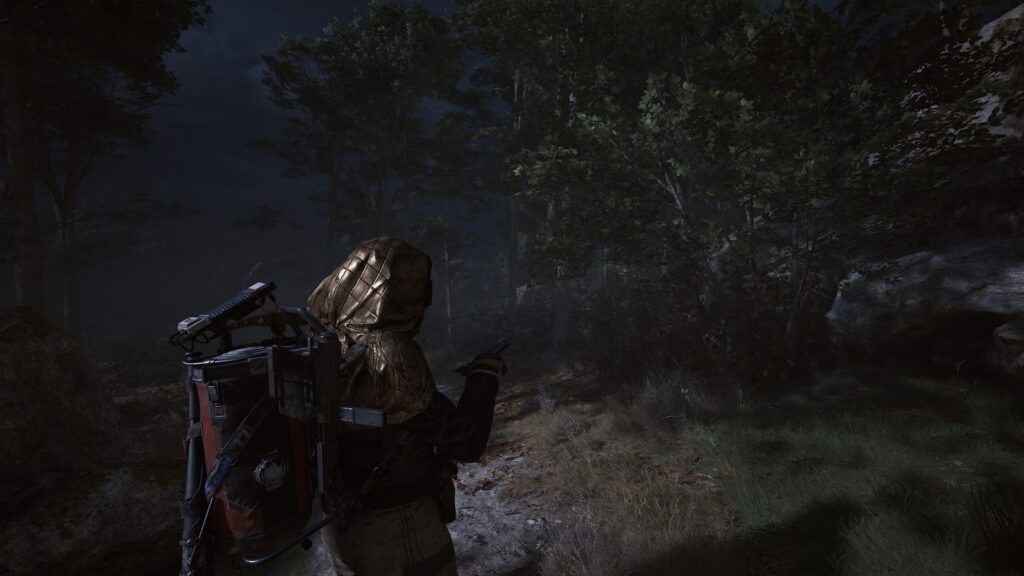
Hydro-Tactical Engagement Strategy confirms that water bodies are among the most effective, persistent natural barriers against ARC. By leveraging the principles of fluid dynamics and thermal dissipation, Raiders convert simple rivers and lakes into strategic kill zones, proving that the rigid mechanics of the machine are easily defeated by the fluid and unpredictable nature of the human environment.